

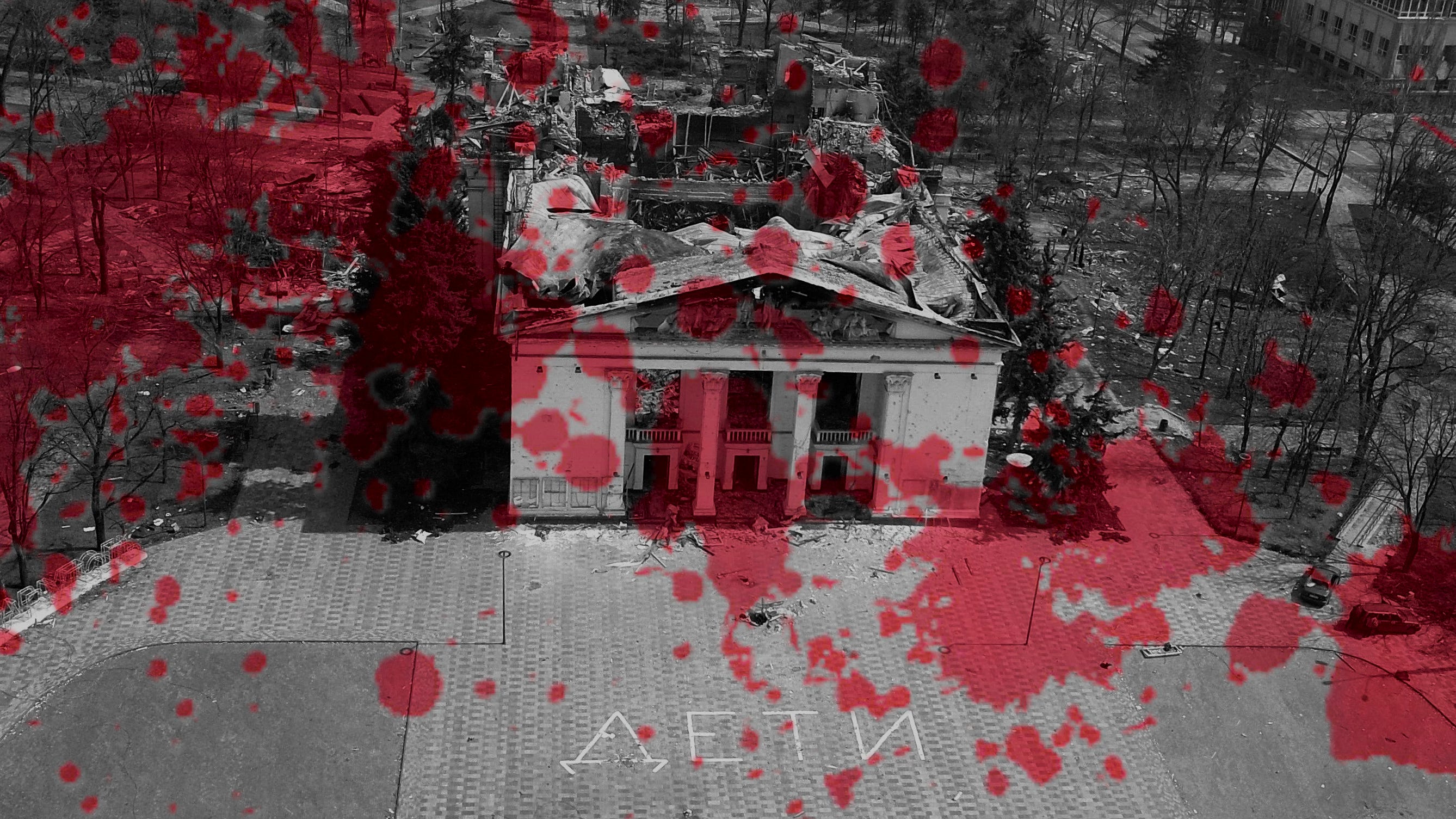
On March 16, 2022, a Russian aircraft dropped a 500-kilogram bomb on the Mariupol Drama Theatre (Ukraine). The heart of the building was obliterated, transforming the sanctuary into a mass grave for at least 600 people.
Four years later, the survivors are still processing the horror of that day and ensuring that the world does not forget what happened during the siege.
By the third week of the invasion of Mariupol, the city was under a total blockade. With electricity, water, and gas cut off and humanitarian corridors under constant fire, residents were pushed to the brink of survival. In desperation, thousands flocked to the building of Drama Theatre. Built 66 years ago in the monumental classical style, the theatre’s thick walls and deep basements offered a sense of perceived safety. Before the war, the theatre was the city’s cultural hub, staging everything from Boccaccio’s Decameron to the modern rock opera The White Crow.
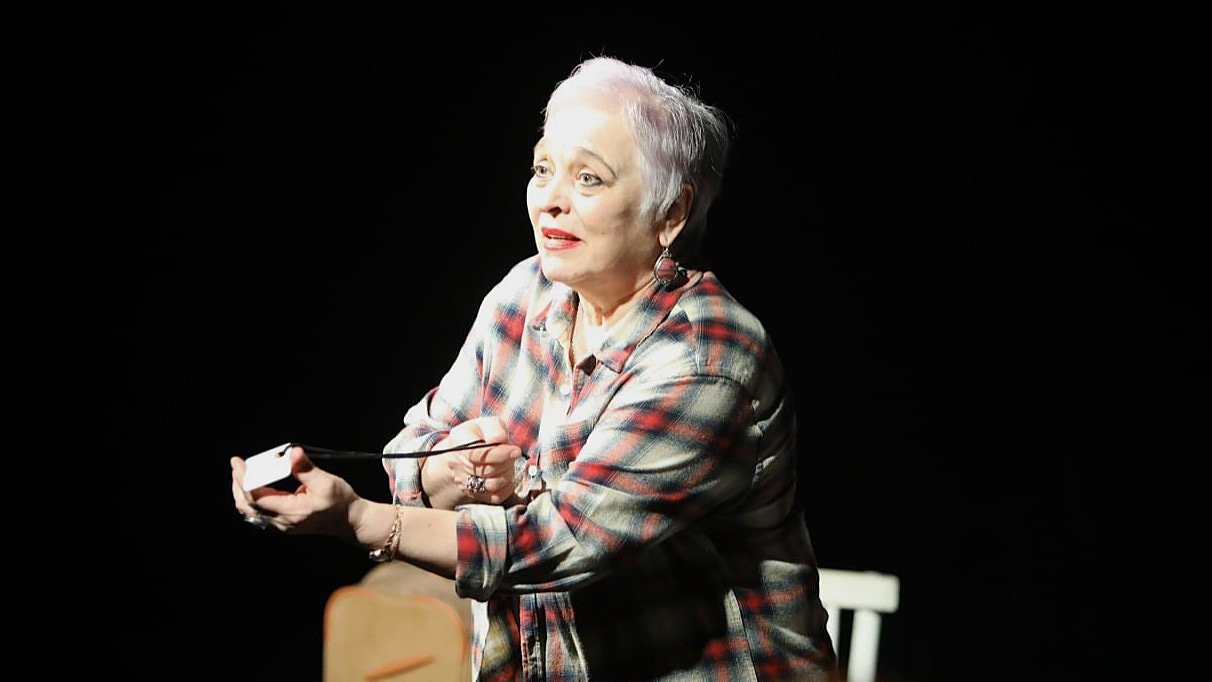
Vira Lebedynska, the actress, had fled Russian occupation before. She fled Donetsk in 2016. On March 3, 2022, after her apartment windows were shattered by shelling, Ms. Lebedynska moved into her windowless basement workroom at the theatre with her cat, a colleague, and the colleague’s family.
“We were cut off,” she recalls. “No news, no way to call home. We just waited.”
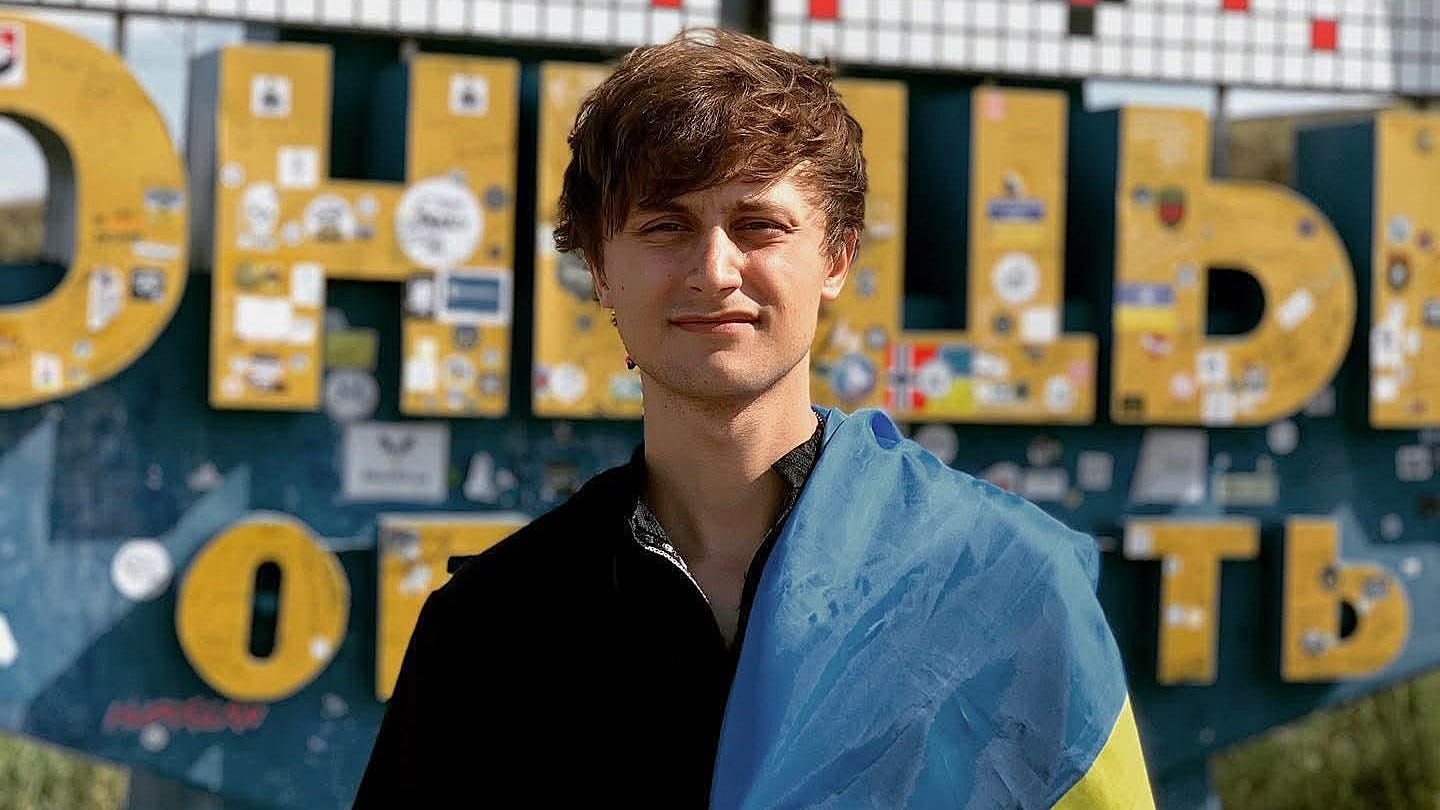
Dmytro Murantsev, an arts student who had also moved to Mariupol from occupied territory years earlier, had joined the crowd at the theatre on March 5, 2022, after running out of food. Life in the theatre became a communal effort. Men scavenged for supplies while Ms. Lebedynska and her friends cleaned.
“We wore handmade tags so people would know we were theatre staff,” she says. “People constantly approached us with questions, looking for hope.”
By mid-March, at least 1,200 people were packed into every square inch of the building, sleeping on the stage, in the corridors, and between rows of seats.
Since many of them were women and children, the word “CHILDREN” (ДЕТИ) was painted in large white letters on the pavement outside, visible from the sky. The hope was that even a pilot would have a conscience.
On the morning of March 16, 2022, that hope vanished.
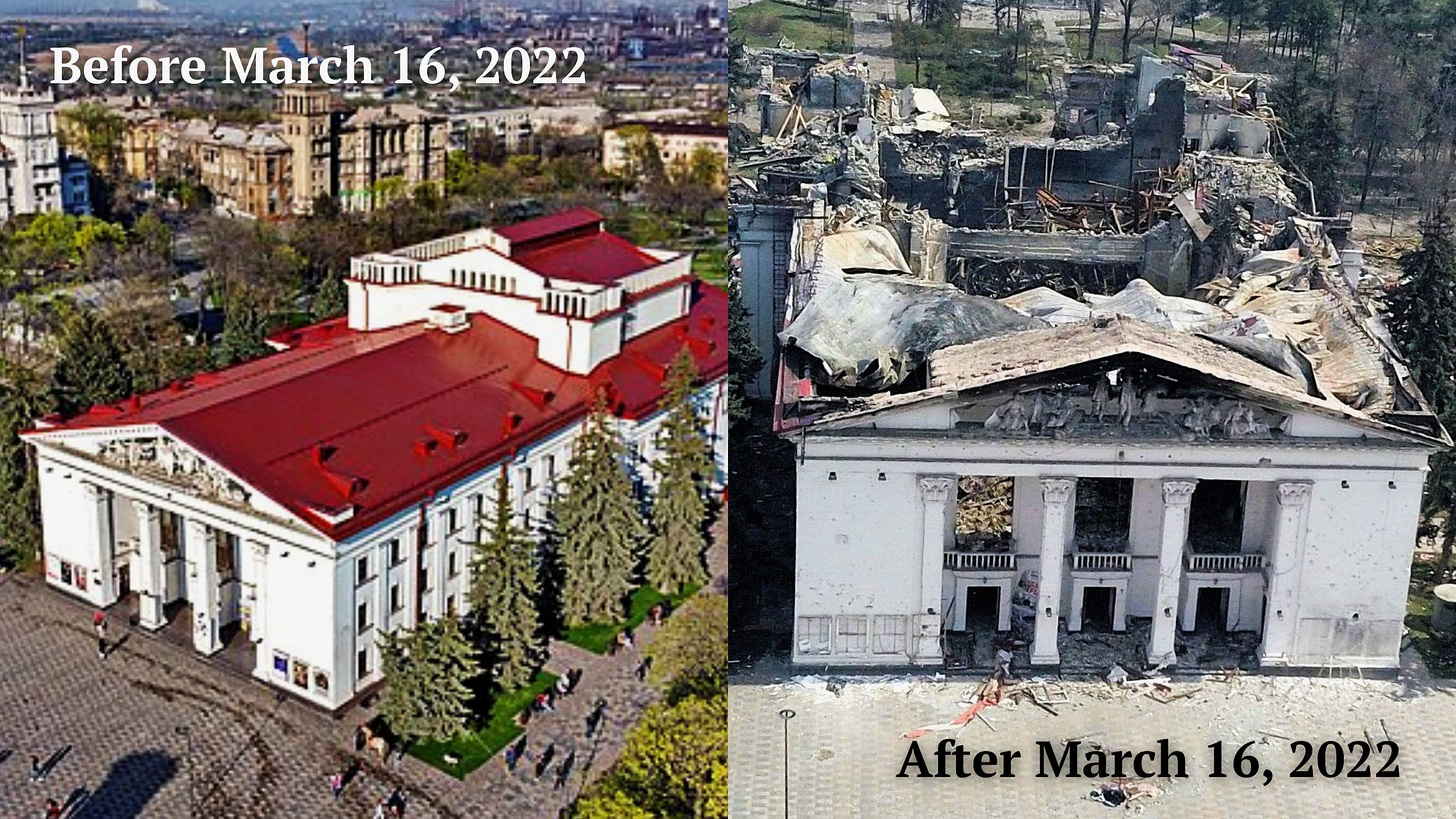
Ms. Lebedynska recalls her cat arching its back and hissing seconds before the blast. The bomb turned the grand hall into a vacuum of dust and debris.
“Everyone in the hall and the corridors died instantly,” says Ms. Lebedynska. “I remember a pale young girl, motionless, with her parents leaning over her in shock.”
Survivors emerged into a -10°C apocalypse. Mr. Murantsev, who had been in the basement wearing only his Spider-Man pajamas, remembers the building shaking as if the earth were opening up.
“I was afraid to look back. I just heard voices from under the rubble, crying for help.”
While Russian state media continues to claim the explosion came from within, survivors like Mr. Murantsev and Ms. Lebedynska remain unwavering in their testimony: it was an airstrike. However, today, evidence of that crime is being buried under layers of so-called “restoration.”
To hide the remains of the victims, the Russian occupying authorities ordered the theatre’s basement -- the very site of the mass grave -- to be filled with concrete.
For months afterward, residents described in social media the inescapable, haunting smell of decay that lingered over the city center. Once the concrete was poured, the smell vanished, but the bodies remained entombed within the foundation.
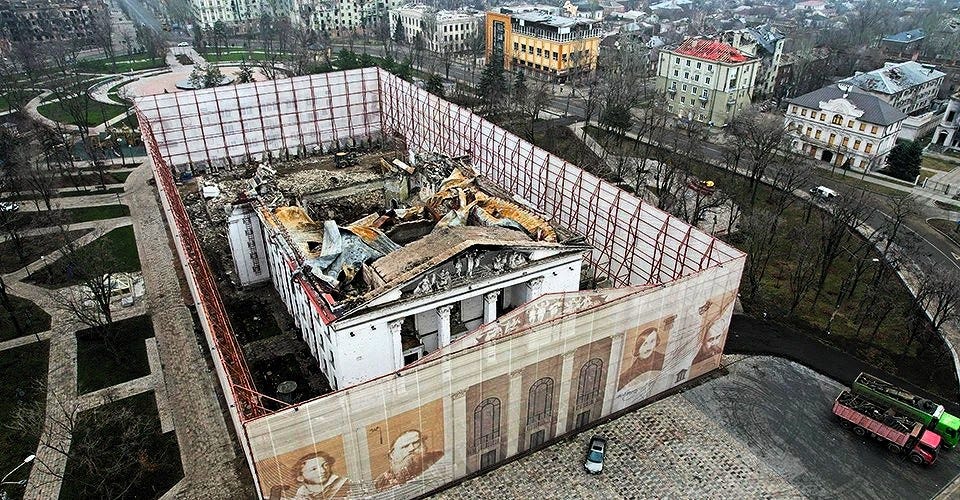
To shield the ruins from public view during construction, the occupiers surrounded the site with massive banners featuring the faces of Russian writers and composers. But behind this facade of “culture,” the building’s original soul was gutted.
The historic theatre had been famously built from white Crimean stone, but according to photos leaked on social media from the construction site, the new structure is a cheap imitation made of ordinary red brick hidden behind layers of plaster.
Even after its reconstruction and reopening in late 2025, the theatre stands today only as a monument to denial.
On the very site where hundreds were crushed, performances now take place for an audience of occupiers and those who have been forced, or those who have chosen to forget the truth.
They echo the state’s mantra of “liberation” while literally dancing on the graves of the innocent.
Yet, even this “triumph” of occupation is a hollow display. Despite the grand opening, locals report that tickets are still being sold for performances at the Mariupol Philharmonic instead of at the theatre itself. The building isn’t ready at all. It’s just a shell, a prop used to maintain the illusion of normalcy for Russian cameras. The new troupe, comprised of local defectors and newcomers brought in from Russia, continues to play their roles in a city where the truth lies buried deep beneath the concrete.
Today, the spirit of the Mariupol Theatre lives on in Uzhhorod, in the western part of Ukraine. Actors have reunited under the direction of Hennadii Dybovskyi. Their first production, Mariupol Drama, is a raw, documentary-style play in which they share their memories.
”It’s a form of therapy,” Ms. Lebedynska says. “It’s about telling the truth about the inhumanity we faced. Our audience becomes witnesses. They cry with us, and in that shared grief, we find the strength to continue.”
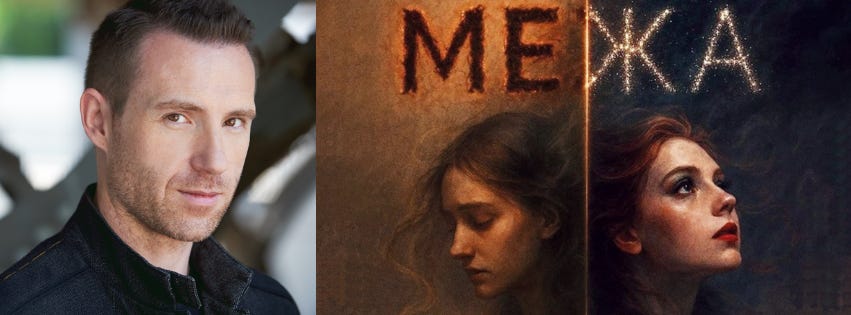
On the fourth anniversary of the Mariupol tragedy, the play The Ghosts of Mariupol premiered in Kyiv. Written and directed by Canadian Christopher Morris, the production was staged in collaboration with a Mariupol Theatre that has made the conscious choice to live and work in Ukraine despite the ongoing war. We hope to see the premiere in Canada next year.