

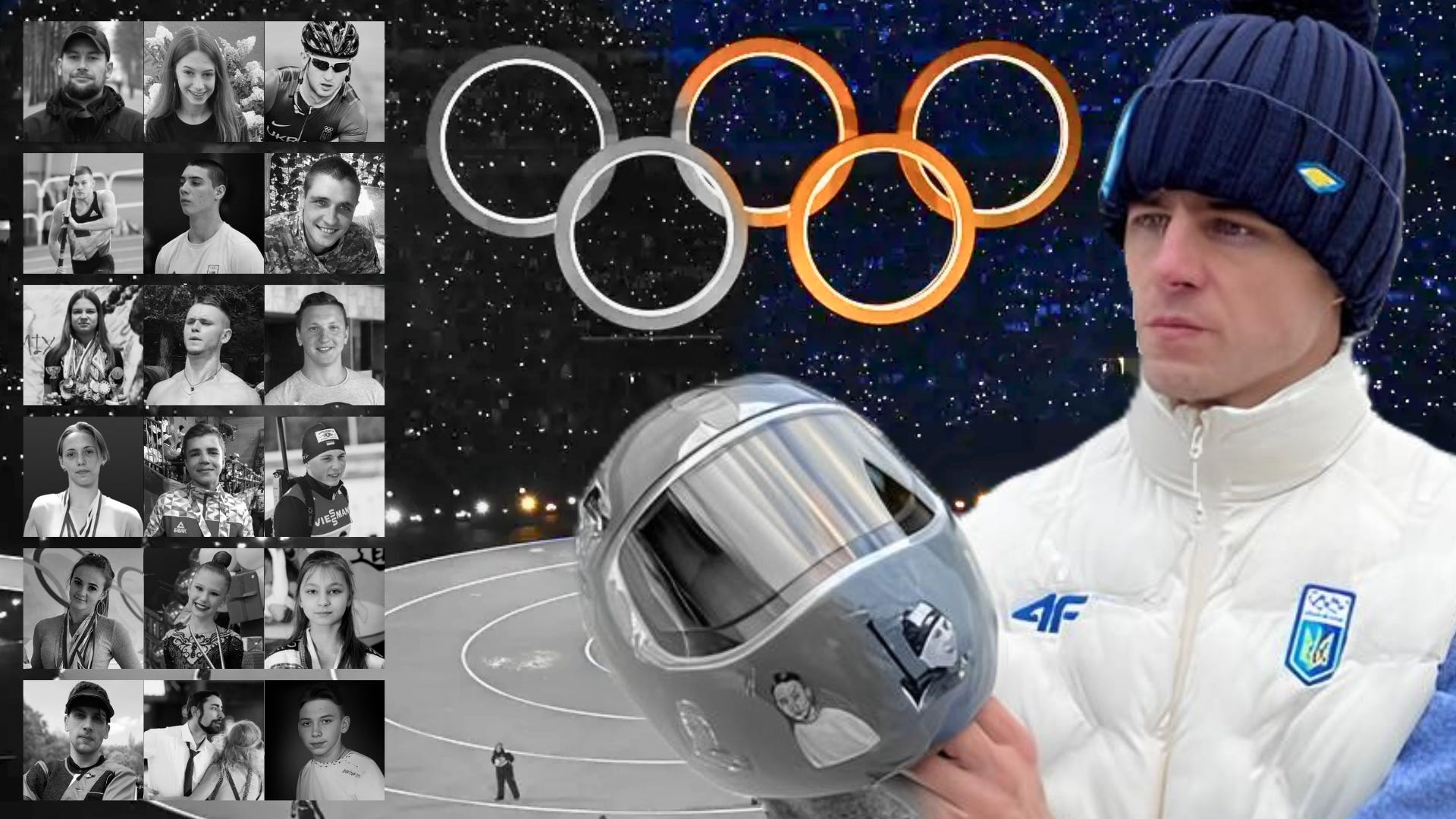
Ukrainian skeleton racer Vladyslav Heraskevych has been prohibited from wearing his custom helmet at the 2026 Winter Olympics. The helmet features portraits of more than 20 Ukrainian athletes killed since Russia’s full-scale invasion began. For Heraskevych, the helmet was a tribute to his fallen colleagues in the Olympic movement.
IOC representative Toshio Tsurunaga personally informed the athlete of the ban. He categorized the tribute to the fallen athletes as “political propaganda.”
In response, the National Olympic Committee of Ukraine has maintained that the helmet fully complies with IOC regulations, stating that it contains ‘no political slogans’ and ‘does not express any form of racial discrimination.
The irony of the ban is stark. While the IOC silenced Heraskevych’s tribute to his fallen peers, including children who died before achieving their Olympic dreams, Italian snowboarder Roland Fischnaller continued to compete wearing a helmet featuring the Russian flag. This symbol is explicitly barred from the Games under current sanctions.
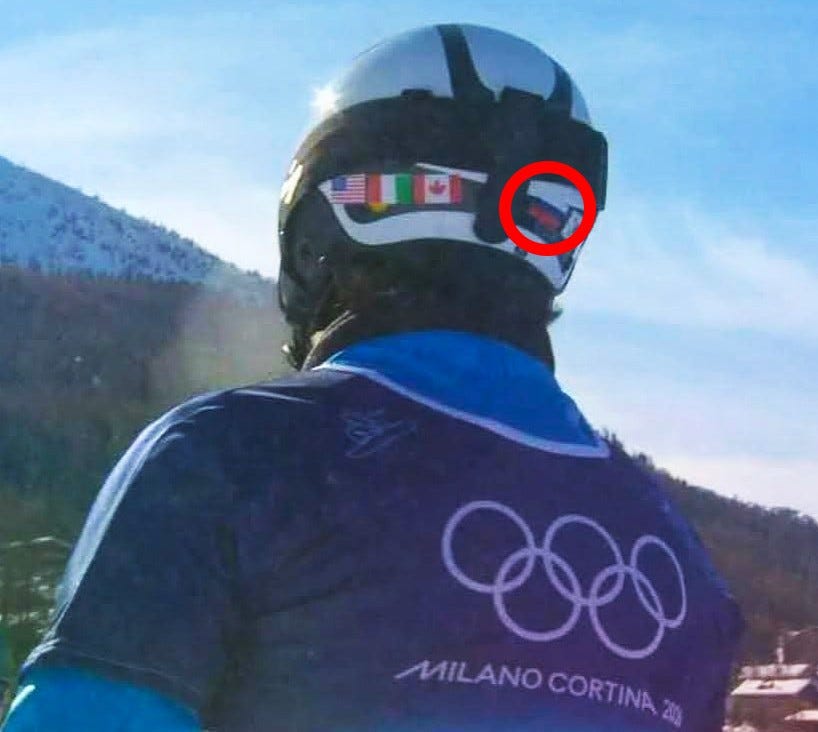
By labeling the faces of deceased children as "propaganda" while overlooking a banned national symbol of the aggressor state, the IOC’s application of Rule 50 seems not only selective, but also fundamentally compromised.
Ukrainian President Volodymyr Zelenskyy also addressed the controversy: “This truth cannot be ‘inconvenient’ or labeled a ‘political act.’ It is a reminder to the entire world of what modern Russia represents.”
The Choice of Defiance
Amidst the controversy, the IOC suggested that Heraskevych wear a black armband instead of his “Helmet of Memory.” He rejected the compromise, stating that the organization “would not have enough black armbands” to honor all the fallen athletes properly.
Despite the official ban, the skeleton racer intends to wear the helmet during the competition.
“These athletes were all killed, but their voices are so loud that they can be heard,” Heraskevych declared.
The IOC’s ruling effectively erases these faces from the Olympic stage:
Children Denied a Professional Future
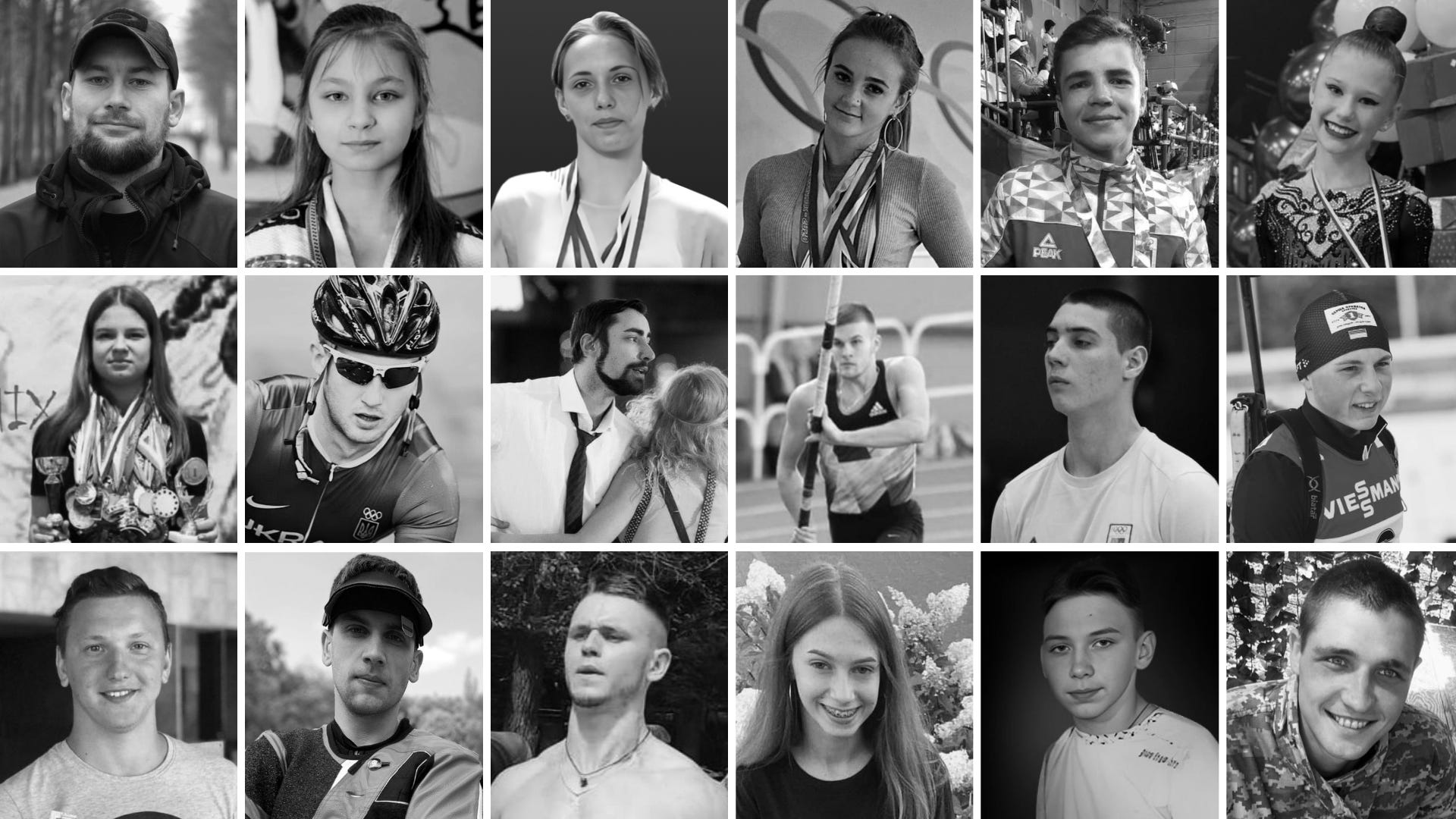
Viktoriia Ivashko (9): Judoka. Killed during a missile strike on Kyiv on June 1, 2023.
Kateryna Diachenko (11): Gymnast. She was killed when her home in Mariupol was hit by a Russian shell on March 12, 2022.
Nazar Zuy (13): Boxer and soccer player. He was killed on March 11, 2022, in Mariupol when an aerial bomb struck the building where he was sheltering with his parents.
Alina Perehudova (14): Weightlifter and promising Olympic hopeful. Killed by Russian shelling in Mariupol.
Mariia Lebid (15): Ballroom dancer. Killed in Dnipro on January 14, 2023, when a missile struck on a residential high-rise.
Youth Who Traded Stadiums for Trenches
Karyna Bakhur (17): Kickboxer. Killed during the shelling of her home in the Kharkiv region while preparing for the World Cup in Austria.
Fedir Yepifanov (18): Fencer. Master of Sports and a member of the Ukrainian national team. He suspended his career to defend his country from the begginning of the invasion.
Yevhen Malyshev (19): Biathlete and 2020 Youth Olympian. Killed on March 1, 2022, while defending Kharkiv.
Darya Kurdel (20): Ballroom dancer. Killed during the shelling of Kryvyi Rih while training outdoors with her father.
Maksym Galinichev (22): Boxer and 2018 Youth Olympic silver medalist. Killed in March 2023 in the Luhansk region.
Volodymyr Androshchuk (22): Track and field athlete (decathlon). He dreamed of competing in the 2024 Olympics but he was killed in battle a year before the Games.
Dmytro Sharpar (25): Figure skater and 2016 Youth Olympian. Killed in action near Bakhmut.
Oleksiy Loginov (25): Hockey player. He joined the front lines as a volunteer. He was an only child.
Andriy Yaremenko (25): Greco-Roman wrestler and member of the Ukrainian national team. He was killed while on a combat mission in the Zaporizhzhia region.
Veterans and Mentors
Roman Polishchuk (30): Track and field athlete (long jump). He was killed near Bakhmut while serving in the Kyiv Territorial Defense.
Mykyta Kozubenko (31): Diver and coach. Served in the National Guard of Ukraine.
Oleksiy Khabarov (31): Shooter and Ukrainian record holder. In November 2024, he won a silver medal at an international tournament in Romania.
Kateryna Troyan (32): Track athlete and mountaineer. She was killed on the Pokrovsk front while serving in the paratroopers.
Pavlo Ishchenko (33): Powerlifter and strongman. A multi-time champion who continued to compete and win during the full-scale war.
Taras Shpuk (34): Invictus Games coach. He developed wheelchair basketball and rugby for veterans in Ukraine.
Andriy Kutsenko (35): Cyclist. He returned from Italy to join the Armed Forces of Ukraine.
Ivan Kononenko (42): Actor and strongman. Returned to the front lines after recovering from a serious injury.
These individuals did not choose war. They chose sports, training, and the pride of seeing their national flag on the podium. Today, their faces are not “politics”. They are evidence of a reality that the world cannot afford to ignore.
To date, more than 650 Ukrainian athletes and coaches will never compete again. Russia has destroyed over 800 sports facilities. By labeling their memory as “propaganda,” the IOC becomes complicit in the silencing of these losses