

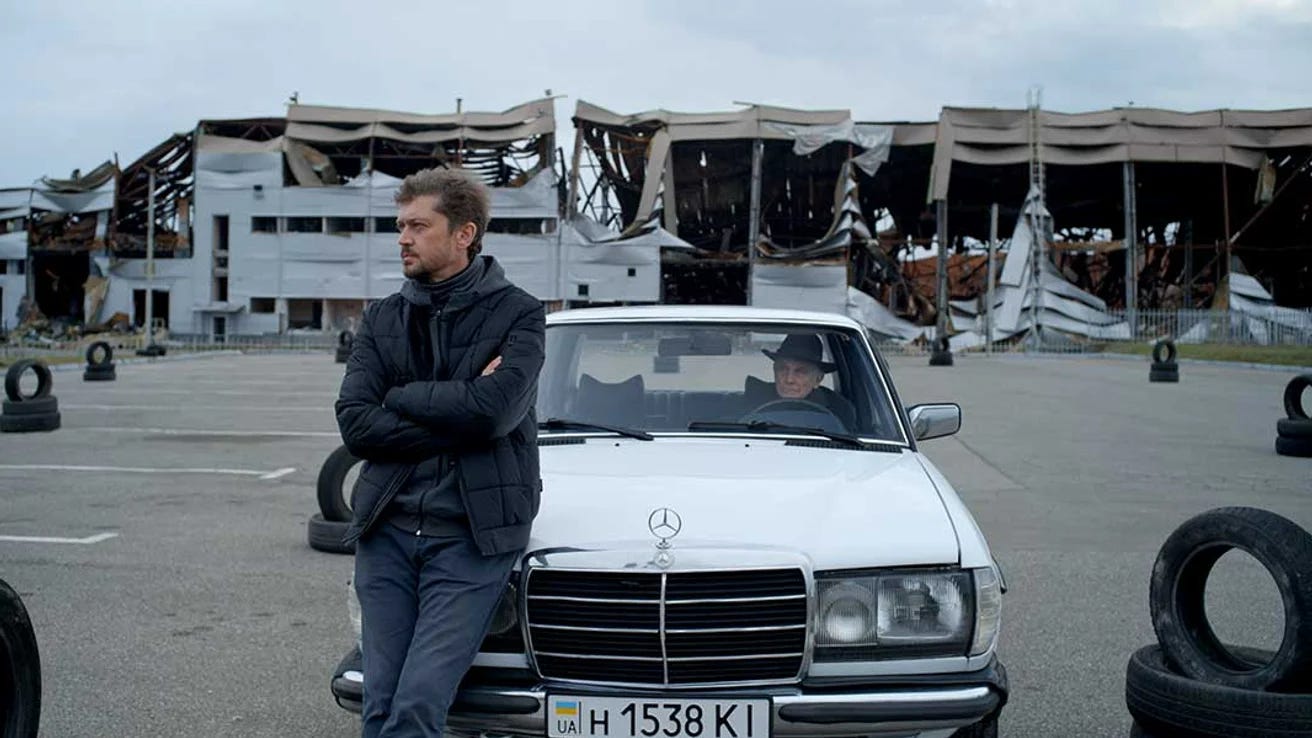
The biggest buzz at this year’s TUFF (Toronto Ukrainian Film Festival) surrounds a film that has already made a profound impact on the global stage. To the Victory! secured the prestigious Platform Award and a $20,000 prize at last year’s TIFF.
However, the film’s true power lies beyond its accolades. Its theme is simple yet complex: Vasyanovych dares to look past the current frontlines to explore what happens after the final shot is fired.
The film is set in a post-war Kyiv of the near future and offers a quiet, haunting look at the wreckage war leaves behind — not in brick and mortar, but in the human soul. Director Valentyn Vasyanovych poses painful questions we often avoid: “How will millions of refugees return? Can broken families ever truly reunite? Can a nation heal its internal fractures?”
As producer Volodymyr Yatsenko noted after the TIFF premiere, the opportunity to film a “possible reality” gave the team creative freedom to confront these anxieties head-on. The result is a rare profoundly moving work — a film that feels heavy yet strangely healing.
Interestingly, Vasyanovych describes this story as a comedy, though not in the traditional sense. It offers a dark and ironic perspective on a world turned upside down. By finding humor in tragic situations, Vasyanovych highlights a Ukrainian trait: the ability to laugh at darkness to survive it. It’s a masterpiece of irony that proves the human spirit remains stubbornly, and sometimes hilariously, resilient, even in the bleakest of futures.
But how do you capture the essence of “victory” when the battle is still raging outside your window? In our interview, Valentyn Vasyanovych talks about the terrifying personal experiences that shaped the script, the necessity of stepping in front of his own camera, and why the work itself became a psychological refuge for his crew.
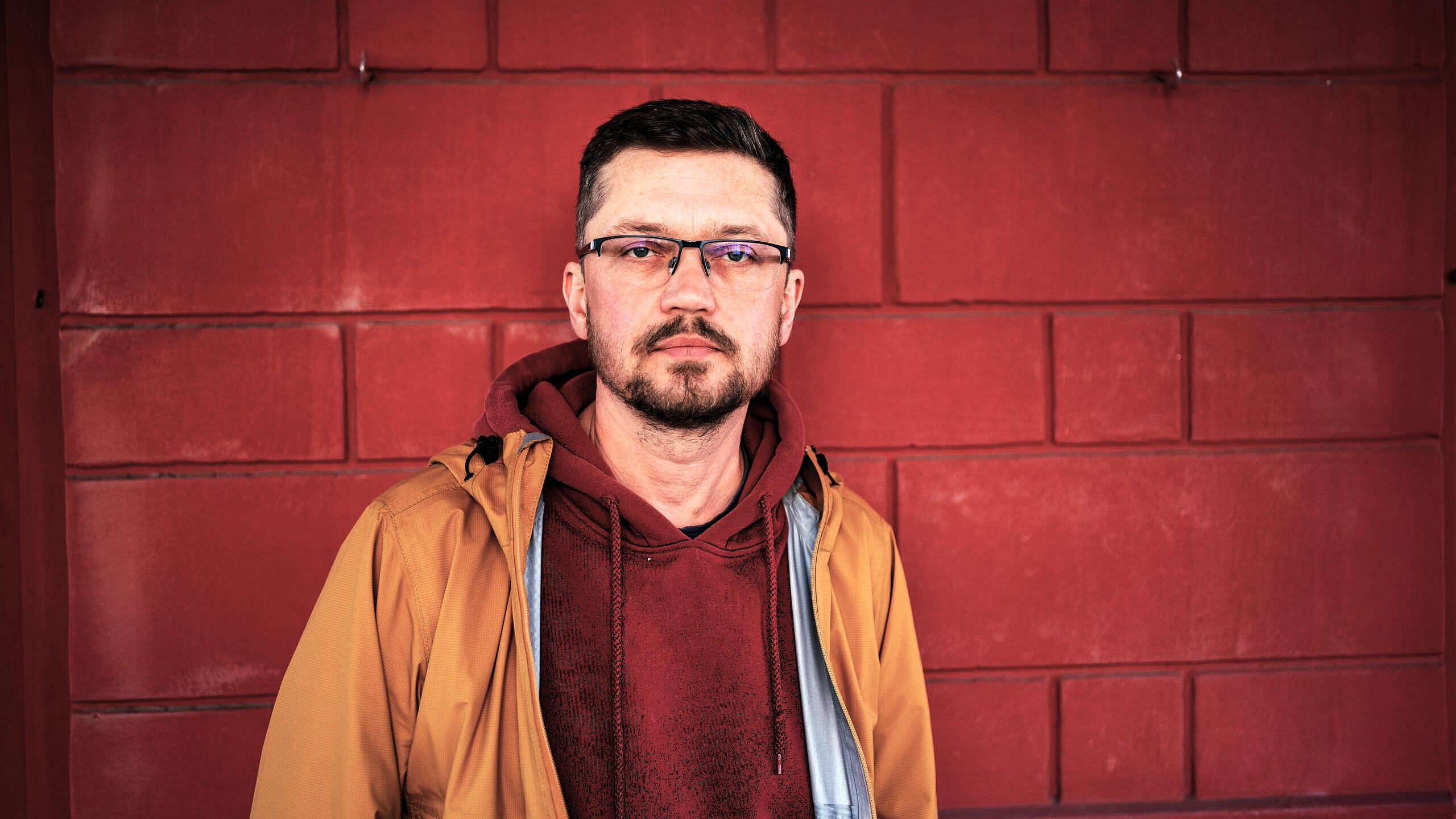
BT: To the Victory! feels incredibly intimate, almost like a private diary, especially considering your own family’s experience with displacement. Did this story emerge slowly from your reflections, or did the urgency of the situation force you to start filming immediately?
VV: I was scared seeing the families of my friends and colleagues falling apart. My own family was abroad, which made me anxious. I feared the country might disappear if women and children didn’t return. Inspired by this dystopian reality, I started working. The film isn’t cheerful, but it is a comedy. Sometimes, we need to laugh at sad things, too.
BT: In this film, you are both the director and the face of the story. How did this shift change the narrative?
VV: We initially cast Ukrainian actor Zhenya Chernikov in the lead role, but then he left to fight in the war. I realised that, since the film was about me, I was the only person who could play me. Then the decision was made to film our whole group of six, sometimes eight, people
BT: Your production model seems incredibly streamlined. How did working with a small, versatile team impact the filming process?
VV: I am a director, screenwriter, actor, cameraman and editor. My team is made up of multi-skilled professionals. Misha Lubarsky was both cameraman and gaffer, Vladlen Odudenko handled art, production design, and props. We were comfortable working in such a tight setup. When someone left for another project, we waited, which slowed us down, but also gave space to reflect and grow ideas.
BT: Independent films usually rely on a complex network of backers. How did you balance the various funding sources to maintain progress on the project and secure a budget of €400,000?
VV: International partners played a key role in making this film happen. The Netflix Academy funded the scriptwriting, and the European Solidarity Fund for Ukrainian Films also contributed. We co-produced with Lithuania and received 70,000 euros from Eurimages. However, I initially used my own savings specifically for filming, since most of the co-production funds were allocated to post-production.
BT: Your shots often last six minutes or more. Why is this stillness necessary for this story?
VV: I feel comfortable outside established frameworks. This style is part of who I am. I like to examine the shot closely, and right now, I feel most at ease when it lasts about six minutes. There are shorter shots in this film too, some three to four minutes long, but they still feel unfinished to me.
BT: Which scene was the most challenging for you?
VV: It was a difficult break-up scene where my wife (Marianna Novikova) says she won’t come back. I had to reach the right emotional state. We rehearsed the key moments, but during filming, Marianna suddenly began to cry real tears, it caught me off guard. Everything felt natural. The viewer sees a man whose world is falling apart who doesn’t know what to do.
BT: The film captures the sense that life is unfolding unexpectedly. To what extent did you leave room for spontaneity, and how did that change your original script?
VV: All our actors were non-professionals, so we relied on improvisation. We lost parts of the script but gained spontaneity and real connection. I set the structure, but dialogue and details emerged in rehearsal.
Interestingly, the roof fight scene from the very first rehearsal ended up in the final cut. Misha Lubarsky and I set up the camera and filmed without dialogue, just reacting and searching for words. We later shot the scene with scripted lines, but the rawness of that first take felt more real.
BT: Filming during blackouts and air raids sounds like an impossible task. Looking back, was the drive to finish the film a matter of professional duty, or did the filmmaking process itself become a psychological refuge for the crew?
VV: Actually, we had already adapted to those conditions in Ukraine. We had a generator that needed occasional recharging to keep us supplied with electricity. Yes, we were sleep-deprived after the shelling, but we had been through it before. We did everything we could to complete the film given our circumstances. We tried not to focus on the difficulties. The work itself kept us going, both practically and psychologically.
